Future Trends in Employee Monitoring and Workplace Analytics
The world of work is becoming digital, and the aspect of monitoring employees is changing as well. In the context of fast technological progress and the evolving attitude to remote and mixed work, new tendencies are developing the future of monitoring and workplace analytics.

The world of work is becoming digital, and the aspect of monitoring employees is changing as well. In the context of fast technological progress and the evolving attitude to remote and mixed work, new tendencies are developing the future of monitoring and workplace analytics.
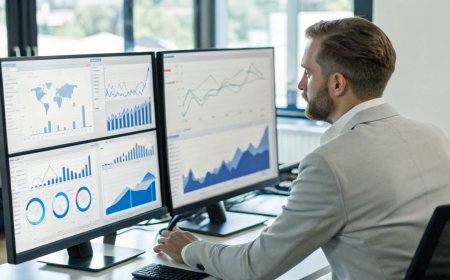
The artificial intelligence (AI) integration into employee monitoring software is one of the largest changes. Based on large sets of behavioral data, AI can tell you about the productivity patterns, the risks of burnout, and even suggest workflow changes. This makes the process of managing the workforce more dynamic and smart.
The other trend is that monitoring is becoming more and more personalized. Instead of using the same metrics across all the employees, new tools will provide roles-based tracking and personalized dashboards. This makes sure that monitoring is meaningful and non-invasive.
There will also be a shift in the workplace analytics to predictive. Rather than simply reporting what occurred, sophisticated monitoring software will predict trends and propose actions. It may, as an example, tell managers when a project is likely to be late depending on past team performance.
There is also an increase in the popularity of privacy-preserving technologies. There are the tools emerging that anonymize the data, implement user controls, and offer opt-in options to strike the balance between monitoring and the employee autonomy. Such innovations have the advantage of solving ethical issues and still provide insights.
Future monitoring strategies will be mainly concerned with employee wellness. In order to prevent employee overwork, monitoring platforms will not only monitor output, but will also monitor well-being indicators, like the time spent at the screen, idle time, and break frequency.
The adoption of other workplace tools is growing. The employee monitoring software will become more and more aligned with the project management, HR, and communication platforms to provide an end-to-end picture of performance and engagement.
Regulations are also changing. Countries are passing more stringent regulations on internet privacy, and companies are considering whether they need to redesign their practices of gathering and storing surveillance data. The future will need tools that not only are powerful, but also respectful of rights and compliant.
Concisely, the employee monitoring of the future is more intelligent, human-friendly, and integrated. Forward-looking tools and policies will not only increase productivity but also make workplaces more interesting, less disrespectful, and more efficient.
When these trends are adopted and employed with a keen use of employee monitoring software, organizations will be ready to embrace a world where businesses and employees are successful.