The Impact of Artificial Intelligence on the Transformation of Daily Life
Artificial intelligence (AI) has evolved from a concept in science fiction to a crucial aspect of our daily lives in just a few years. You already use AI when you browse social media, ask Alexa to play your favorite music, or use Google Maps to obtain real-time traffic reports.

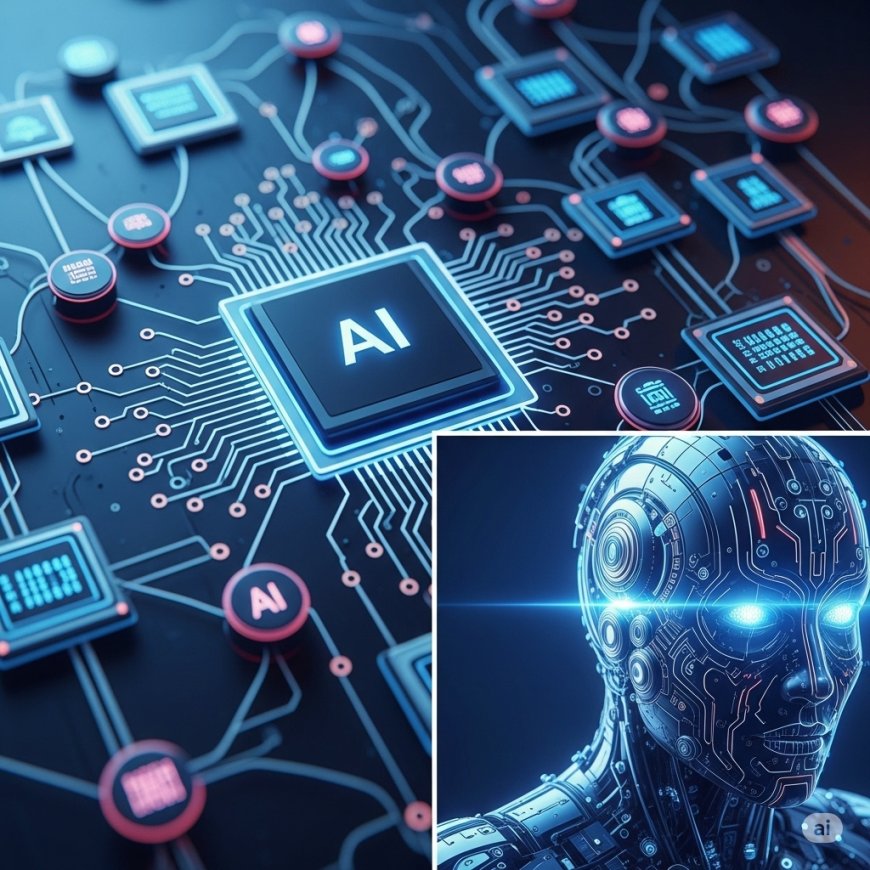
Artificial intelligence (AI) has evolved from a concept in science fiction to a crucial aspect of our daily lives in just a few years. You already use AI when you browse social media, ask Alexa to play your favorite music, or use Google Maps to obtain real-time traffic reports.
What comes next, though? Furthermore, how precisely is AI changing how humans interact, work, and live?
? Really, What Is AI?
The ability of machines to carry out tasks that generally require human intelligence, such as comprehending natural language, identifying images, making judgments, or learning from data, is referred to as artificial intelligence (AI). The field, which encompasses deep neural networks and machine learning algorithms, is evolving rapidly and is being adopted by nearly every business.
? Commonplace Instances of AI at Work
Here are some ways AI subtly influences many facets of contemporary life:
Talking assistants and smartphones
Natural language processing enables Siri, Google Assistant, and Alexa to comprehend our orders, respond to our inquiries, and automate processes such as sending SMS messages or setting reminders.
Streaming and Suggestions
Netflix makes show recommendations based on your viewing preferences. Spotify creates the ideal playlist for you. Videos you didn't realize you wanted are queued up on YouTube. That's personalization driven by AI.
Online shopping and chatbots
Online merchants, such as Amazon, utilize AI for automated customer support through chatbots, dynamic pricing, and product recommendations.
AI solutions for healthcare and diagnostics enable physicians to identify illnesses from X-rays or predict patient risks, thereby improving the speed and accuracy of medical care.
Finding Your Way and Sharing Riding
Ola and Uber use AI, as well as Google Maps, to plan routes, forecast ETAs, and even calculate surge pricing.
? AI and Privacy: A Two-Sided Blade?
Concerns surrounding algorithmic bias, data privacy, and job displacement have increased as AI's capabilities continue to expand. Although AI can simplify and expedite processes, there are drawbacks as well, such as the need to ensure decision-making is transparent and to protect against monitoring.
? What's Next in the Future?
Writing emails, creating artwork, and even writing music are all being made possible by generative AI (such as ChatGPT, DALLE, and Sora).
Autonomous vehicles, which have the potential to transform transportation and lower accident rates, are currently undergoing testing worldwide.
Teachers can now identify challenging pupils early on, thanks to AI in education, which is designing individualized learning paths.
Conclusion
Artificial intelligence is already here, transforming how we interact, learn, live, and shop. It is no longer a sci-fi fantasy. As with any powerful tool, the objective is to use it in a way that is morally, strategically, and imaginatively sound.
Machines won't replace humans in the Future. It's about people using machines more intelligently.